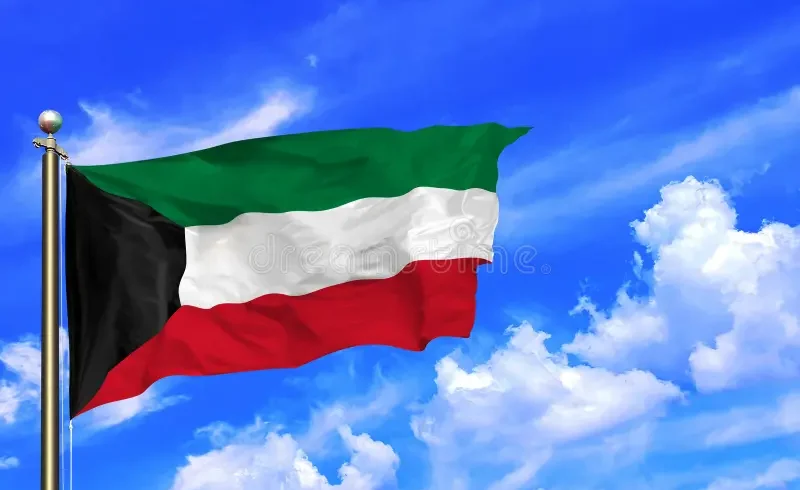

Kuwait’s sovereign wealth fund has about $1.07 trillion put away.
Split that between its 1.56 million citizens and it comes to roughly $685,000 each.
Nobody can actually withdraw it. The money belongs to the state, and the fund that looks after it owns none of it. But the sum is the quickest way to see the scale. It is the fifth-largest sovereign wealth fund in the world, and it belongs to a country smaller than New Jersey.
Kuwait’s population is 5.31 million, and about seven in ten are foreign. Of a workforce of 3.26 million, some 2.8 million are expatriates. So: a small group of citizens, employed mostly by the state, sitting above a much larger workforce that runs the economy all of it underwritten by a portfolio invested almost entirely abroad.
The room where the country happens
None of that is visible from a ministry. To understand how Kuwait works, you have to go and sit in someone’s living room.
Outsiders miss the diwaniya, and it explains more about the country than any statistic.
The diwaniya is a room attached to a family home, with its own door. Several nights a week that door opens and people come tea, food, conversation that runs late. Guests move between houses across an evening. Nobody is invited, because nobody needs to be. Thousands of these run at once, most nights, and they have for generations.
They are also where public life happens. Ideas are tested in them, reputations are made in them, and business moves through them long before it reaches an office.
A country of 1.5 million citizens does not need a formal network. It has a night time routine.
The sovereign wealth fund came first
Kuwait opened an investment board in London in 1953, the first of its kind anywhere. Independence arrived in 1961. For eight years there was a fund managing the money of a state that did not yet formally exist.
Today the Kuwait Investment Authority runs two pools. One is the working account, where oil revenue comes in and government spending goes out. The other is the Future Generations Fund, which by law takes 15% of oil revenue every year and invests it abroad equities, private markets, real estate, and stakes in ports, airports and power grids across three continents.
Roughly 575 people handle all of it. The fund has never held a press conference.
Twice, that quiet institution turned out to be the country’s insurance policy.
Through 1987 its London office had been selling, having decided British shares were expensive. Then October came and the market crashed. With the cash it had just raised, the office bought 19% of BP a stake almost nobody else on earth wanted that week.
Three years later came the invasion. Kuwait’s assets were frozen across every major jurisdiction at once. The London office kept the money moving and the state funded through the months that followed an investment office doing the work of a finance ministry, for a country it could not reach.
Then it paid to rebuild. Half the country’s oil wells had been set alight. Putting them out cost around $1.5 billion; restoring production capacity cost another $8 to $10 billion.
In 1991 the fund executed a $20 billion purchase of bad debt from eleven local banks, catching the financial system before it followed the infrastructure down. When the global crisis came seventeen years later, it was sent in again with $4 billion to steady the market.
Most sovereign wealth funds have never been tested. Kuwait’s has been a lifeline, a bank rescue and a reconstruction agency, and still compounded to a trillion dollars.
What it buys now
In November the fund appeared alongside Brookfield and Nvidia in a programme targeting $100 billion for AI infrastructure. It has been selling down older holdings to pay for it $3.4 billion of AIA shares, $3.1 billion of Bank of America.
It is the same trade Kuwait has always made. Ports and power grids were the infrastructure of the last century’s trade. Data centres are this one’s, and the fund is buying the unglamorous layer underneath the technology rather than the technology itself: land, power, cooling.
The region has moved with it. Of the 42 deals worth more than $1 billion completed globally this year, Gulf funds were involved in 21.
The instruction
In 1953, a country that did not yet exist decided its new oil money was not really its own. It belonged to people who had not been born.
That decision has since survived a war, two market crashes and a banking collapse.
The mechanism was never clever: a fixed percentage, taken automatically, invested somewhere else, and left alone.
Seventy-three years later it is worth $1.07 trillion.
Sovereign wealth isn’t available to most people. The discipline is.