
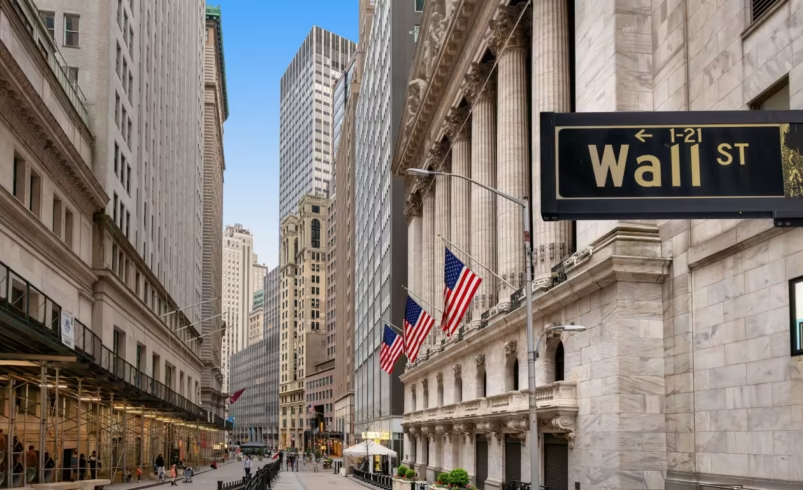

Private equity is doing fewer deals than at almost any point this decade and writing some of the largest checks in its history. In the first half of 2026, deal count fell sharply while total deal value still climbed nearly 10%, according to PwC. The money didn’t leave. It got concentrated into fewer hands and fewer names. Here is who is buying, what they’re buying, and why it matters.
The largest swing of 2026 came from Global Infrastructure Partners and EQT now run by Per Franzén, who took over as chief executive from Christian Sinding last year with their proposed $33.4 billion acquisition of power producer AES. It is a naked bet on one thing: the electricity that artificial intelligence is about to consume in staggering quantities.
In healthcare, Stephen Schwarzman’s Blackstone, the world’s largest alternative-asset manager with more than $1.3 trillion under management, teamed with TPG to take diagnostics maker Hologic private for roughly $18.3 billion. Blackstone reappeared in Europe too, joining EQT to buy Spanish waste-management group Urbaser from Platinum Equity for about €5.6 billion in a 50-50 split another grab for an infrastructure-grade asset with predictable cash flows.
Europe stayed hot at the top end. Advent International, alongside FedEx, agreed to buy Polish parcel-locker operator InPost for roughly $9.3 billion. And KKR, the firm Henry Kravis built, spent $1.4 billion buying Arctos Partners a sports-investing and secondaries platform a sign the biggest sponsors are now buying the machinery of dealmaking itself, not just companies.
Software was private equity’s favorite hunting ground for a decade. In 2026 it cratered. Platform buyouts hit their lowest share in years, with US software deal value reaching just $16.24 billion in five months roughly a quarter of 2025’s record $156 billion pace, according to PitchBook.
The warning shot came when a creditor group led by Blackstone seized control of Medallia after Orlando Bravo’s Thoma Bravo declined to put more cash into the company against billions in debt a deal expected to cost the sponsor as much as $5.1 billion. The fear underneath it all: that AI will commoditize entire software categories, the so-called “SaaS-pocalypse.”
Dealmaking didn’t die it shrank. The year’s biggest software purchase was Hg’s $6.4 billion take-private of OneStream, and even there Hg shared the equity with co-investors.
Below the megadeals, add-on acquisitions now make up nearly half of all software deal value.
The same concentration runs through corporate venture capital, where the single most consequential backer of the cycle is Jensen Huang’s Nvidia.
Its venture arm, NVentures, is almost absurdly lean a two-person team led by Mohamed “Sid” Siddeek, who first crossed paths with Huang at Morgan Stanley during Nvidia’s IPO roadshow in the late 1990s. That tiny team has already nurtured roughly 20 unicorns, including AI video startup Synthesia, clinical-AI company Abridge, and quantum firm PsiQuantum. Siddeek’s screening test is brutally simple: he backs anything Nvidia’s technology can touch that’s also worth investing in.
The bigger checks come from Nvidia’s corporate-development team under Vishal Bhagwati, which led more than $40 billion in AI equity investments in just the first four months of 2026. When chipmakers like Nvidia, Intel Capital, AMD, and Qualcomm Ventures all pile into a single round as they did in Hark’s $700 million Series A it isn’t passive investing. It’s vertical integration: financing the companies that will buy tomorrow’s chips.
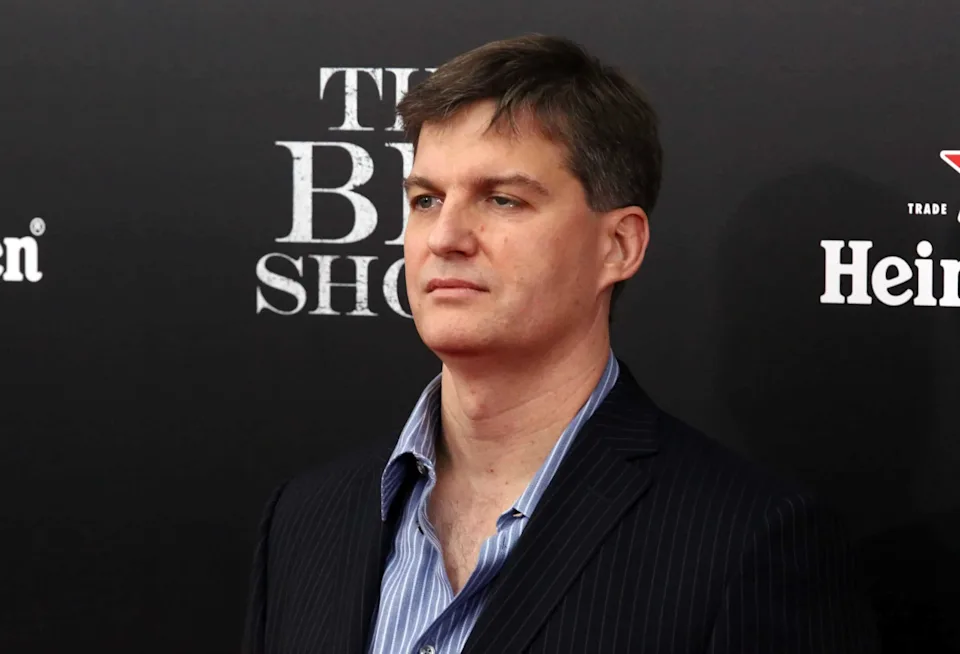
Not everyone is cheering. Investor Michael Burry, of “Big Short” fame, has flagged the circular logic at the center of it Nvidia funding customers who then spend that money on Nvidia hardware a loop critics warn could inflate demand. Either way, the gravity is undeniable: AI absorbed about 80% of a record $330.9 billion in global venture funding in the first quarter, per KPMG, with Salesforce Ventures (Cohere, PolyAI) and Google Ventures (Sierra’s $950 million round) chasing the same thesis.
It would be easy to read the falling deal count as a slowdown. It isn’t one. Volume dropped, but value climbed capital is pooling in fewer, larger, higher-conviction bets, run by fewer, bigger names. In venture, a handful of strategic balance sheets is quietly deciding which startups get to exist at all.
The money got pickier about whose name is on the check and whose name is on the company.